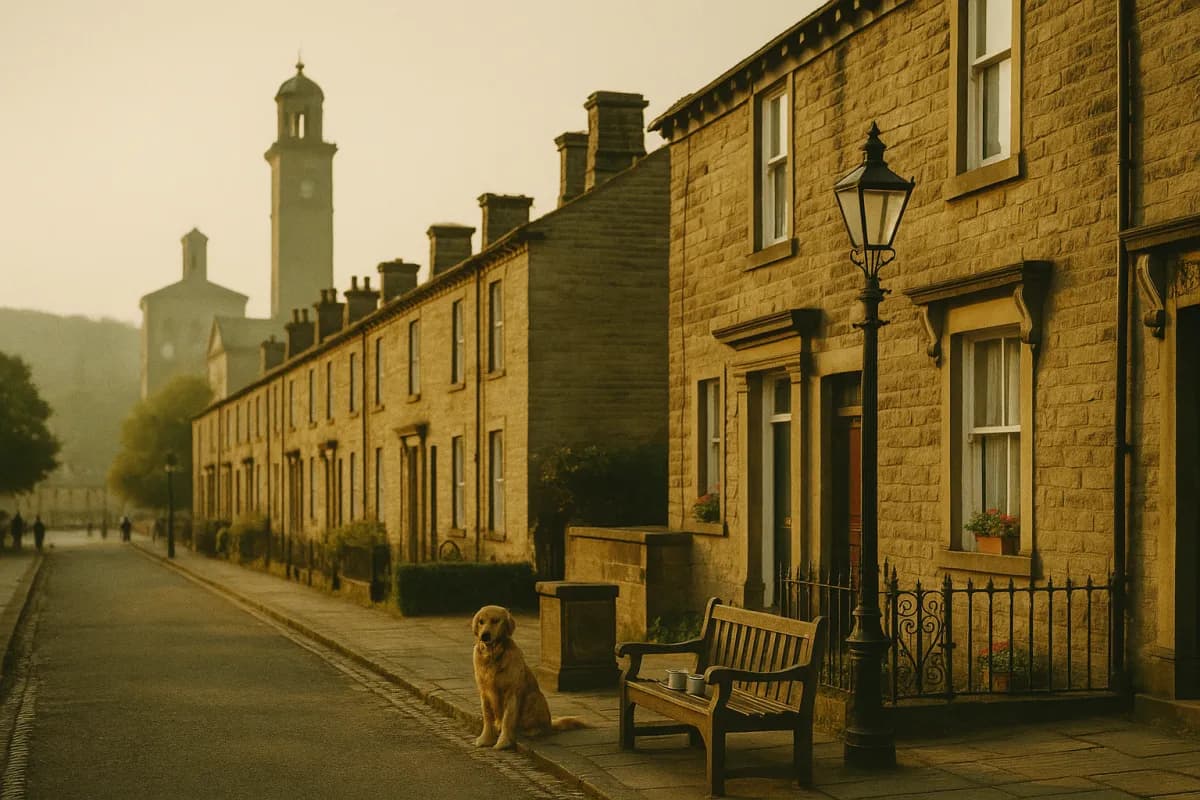
Saltaire was not built as a Christmas destination. It was built as a textile mill and the worker village around it, laid out in 1853 by Titus Salt on a grid of honey-coloured sandstone terraces between the River Aire and the Leeds and Liverpool Canal. In summer the stone picks up the light and the place looks almost Mediterranean. In December it does something else.
The grid is tight and the buildings are low, so the village quiets down in winter in a way that feels different from a town centre on the same date. Victoria Road, the main drag running from the station past Salts Mill to Roberts Park, takes on a slight glow from the shop lights at Salts Mill and the streetlamps that still look Victorian from the pavement. The canal towpath is flat and usually dry underfoot. The church at the top of the village is Grade I listed and has the kind of acoustics you want if anyone is singing anything unaccompanied.
None of that makes Saltaire a Christmas market town. It is not one. The village does not put out a programme of festive events, there is no year-on-year light trail, and large parts of Salts Mill close for a few days around the holiday itself. What Saltaire does have, if you come for it deliberately, is a clean architectural idea that looks as good under frost as it does in July, a park and a canal walk on the doorstep, and enough independent shops at Salts Mill to fill a gift list without going near a high street chain.
This page is about what that actually looks like when you come to visit, and what to check before you leave the house.