Skip to content
Salts Mill, Saltaire

Editor’s pick

What’s actually worth seeing in Saltaire

Six things we would not let anyone visit Saltaire without seeing, an honest list of what we have left out, and a short section on what we think is overrated.

Last updated 11 April 2026.

This isn’t a listicle

If you search for “Saltaire attractions” you will find pages telling you about the top ten or top fifteen things to see in the village. Most of them pad the list to hit the number. We are not going to do that. Saltaire is small and dense. There are six things that matter, and a handful more that are fine if you have the time. That is the whole honest list.

What follows is the editor’s pick, written as if a friend asked us over coffee: “if I’ve got a few hours in Saltaire, what do I actually need to see?” At the end we have put what we would leave out if you only have two hours, what we would add if you have a whole day, and the short section we wish every tourism page had the nerve to write — what we think is overrated.

The six things that make Saltaire Saltaire

In the order we would do them if we were showing someone round for the first time.

The main event

Salts Mill, as a building

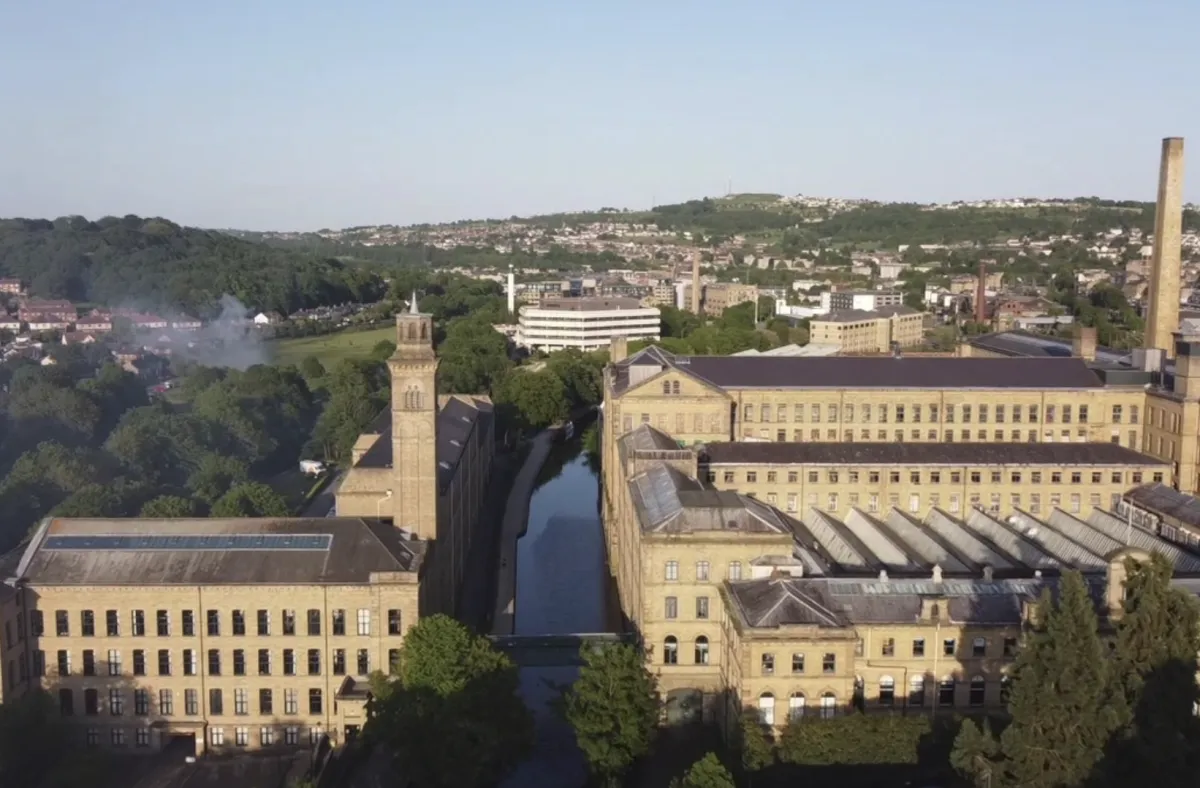
Before the art and the shops and the cafes, Salts Mill is a building. Built in 1853 by Titus Salt to the design of Henry Lockwood and William Mawson, it was at the time the largest industrial building in the world. You walk in off Victoria Road and the first thing you notice is the scale. The floor plates are enormous. The cast-iron columns run off into the distance. The windows are on a scale built for nineteenth-century daylight, not electric lighting.

The reason the Mill is the main event is not that it has art in it — plenty of buildings have art in them — but that the reuse of the building itself is the point. Jonathan Silver bought it in 1987, when it was close to derelict, and turned it into a mix of galleries, shops, offices and cafes. That reuse is why Saltaire still functions as a village instead of being a preserved museum. The Mill is the reason the rest of the village has not been fossilised.

You can walk around the ground and first floors freely during opening hours. Spend thirty minutes on the building alone before you look at anything inside it. The ceilings and columns are what you came for.

Inside Salts Mill

The 1853 Gallery and the Hockney collection

The 1853 Gallery on the first floor of Salts Mill is free and holds one of the largest permanent collections of David Hockney’s work anywhere. Hockney grew up in Bradford and Silver’s friendship with him is the reason the gallery exists. The collection rotates — some of what is on the walls changes every few months — but the core is always there.

The honest advice: do not try to see the whole collection. The rooms are big and the temptation is to walk through all of them in ten minutes. What you should do instead is pick three or four works, sit on one of the benches, and actually look. The space is designed to reward stopping.

Go in the morning if you can. The Mill gets busier as the day goes on and the gallery fills with people moving rather than looking. Before 11am on a weekday is ideal.

Across the river

Roberts Park

Roberts Park sits across the Aire from the village proper, reached by a footbridge from the southern edge of Saltaire. It is a Victorian riverside park built as part of the original model village plan, with a bandstand, a cricket pavilion, mature lime and oak trees, open lawns running down to the river, and a small cafe (the Half Moon) that opens most weekends.

The park is the piece of Saltaire that most day visitors miss because it is across a river and feels separate. That is its strength. Twenty minutes in Roberts Park is the easiest way to understand the scale of what Titus Salt was actually building — a planned environment that included a green space as a social amenity when most Victorian mill villages had nothing of the sort. The view back across the river to the village and the Mill is the view you see in the paintings and the postcards.

In summer the bandstand sometimes hosts free weekend concerts. In winter the park is usually almost empty and the light off the river is worth the walk.

A walk, not a place

The canal towpath

The Leeds and Liverpool Canal runs along the back of the village, between Salts Mill and the river, and the towpath runs with it. This is one of the things people underestimate about Saltaire because it is not a building you can tick off. It is a walk you have to do.

Heading west from the Mill, the towpath is flat, usually dry, and takes you through Hirst Wood towards Bingley and the Five Rise Locks — the most dramatic flight of locks in the country. Even if you only walk for fifteen minutes and turn back, the view you get of Salts Mill from the canal is better than anything you will see from the street. Heading east, you pass Roberts Park and on towards Shipley.

The reason this makes the list is that the canal is the reason Saltaire exists in the shape it does. Salt chose the site in 1851 because it was on the canal, the Midland Railway, and the Aire — water for the mill, transport for the cloth, a site clear of the Bradford smoke. Walking the canal is how you see the village as a piece of logistics as well as a piece of architecture. Twenty minutes, minimum.

Walk the streets, not just the landmarks

The village grid itself

Most visitors spend all their time inside Salts Mill and miss the thing UNESCO actually listed the village for. The surrounding streets — George Street, Albert Road, Edward Street, William Henry Street, Titus Street, Amelia Street, Whitlam Street, the whole grid — are a preserved Victorian workers’ housing scheme of a quality that barely exists anywhere else in the country. The stone is honey-coloured local sandstone, the grid is rigid, the houses are small but dignified, and the social hierarchy of who lived where is still legible if you know what to look for.

You do not need a guide. Walk out of the Mill onto Victoria Road, turn up towards the church, and start wandering any side street that looks interesting. Thirty minutes is enough. The almshouses on Victoria Road, the school building, the bathhouse, the dining hall — they are all part of the same planned scheme and you can walk them all in a loop.

This is the editor’s quiet favourite. Most of the coach parties never leave the Mill, which means the side streets are usually silent. That is where Saltaire actually is.

Grade I, usually missed

Saltaire United Reformed Church

At the top of Victoria Road, opposite Victoria Hall, is the Saltaire United Reformed Church. It is Grade I listed — the highest level of protection for a historic building in England — and it is the building most day visitors walk past because it looks too grand to be part of a worker village. That is precisely why Salt built it the way he did. He wanted his village to have a non-conformist chapel that was architecturally the equal of anything in a city centre, and Lockwood and Mawson delivered.

The exterior is worth five minutes on its own. The interior, when it is open, is worth another ten. The proportions are enormous relative to the building’s plot and the ceiling is the thing you are supposed to notice. Opening hours vary — the church is an active congregation, not a museum — so check before you plan a visit around going in. If you time it for a Sunday service or a carol service in December, you get the building as it was meant to be used.

If you only have time for the exterior, stand at the base of the portico on Victoria Road and look at the columns. Then look at the size of the terraced houses across the street. That contrast is the point.

What we have left out, and why

Six things a standard tourism page would pad the list with. All fine. None essential. Here is the honest sorting.

How much of this you can actually do

A few honest time budgets for different kinds of visitor.

If you have two hours

Salts Mill (building + 1853 Gallery) + a ten-minute walk on the canal towpath + the exterior of the church at the top of Victoria Road. Skip Roberts Park, skip the side streets, do not try to shop. This gives you the essence in the time available.

If you have four hours

Everything above, plus a proper walk to Roberts Park and back, a wander through the village grid, and lunch somewhere in the Mill. This is the sweet spot for a day trip: it covers the whole editor’s list without being rushed.

If you have a whole day

Four-hour list plus the full canal walk towards Hirst Wood or Bingley Five Rise Locks (ninety minutes each way), time actually inside the 1853 Gallery rather than walking through it, a visit inside the church if opening hours permit, and a proper meal rather than a cafe sandwich. This is when Saltaire starts to feel like somewhere you know rather than somewhere you saw.

What we think is overrated

The section we wish every tourism page had the nerve to write. None of these are bad; they are just over-represented in write-ups relative to how much they add to a visit.

Getting here

Saltaire station is on the Wharfedale Line from Leeds to Ilkley, about 15 minutes from Leeds city centre and 5 minutes from Bradford Interchange. Trains run every 15 to 30 minutes most of the day. The station is two minutes’ walk from Salts Mill.

If you are driving, Caroline Street car park is the closest and fills up fast on weekends. Exhibition Road is larger and more reliable. Our parking page has the practical detail.

— Saltaire Guide, local editorial. Updated 11 April 2026. If you disagree with any of this, particularly the overrated section, tell us at hello@saltaireguide.uk and we will read it properly.