

Electricians in Saltaire & Shipley
Electrical work in a 170-year-old terrace is not the same as wiring a new build in Shipley. The original Saltaire houses had gas lighting — electricity came later, layered on top of structures that were never designed for it. If you need an electrician here, you want someone who’s opened up a Victorian ceiling rose before. This page helps you find one.
Victorian wiring and why it matters
If you live in one of the original Saltaire terraces — the grid between Victoria Road and Albert Terrace — your house was built between 1853 and 1876. Electricity was retrofitted decades later, often in the 1930s-50s, with rubber-insulated wiring run through the existing stone walls and timber joists.
That rubber insulation perishes over time. It becomes brittle, cracks, and exposes the copper conductor inside. In a dry wall cavity, this can sit unnoticed for years. When it finally arcs — during a storm, when the heating kicks in, when someone plugs in a high-draw appliance — you get a fault. Sometimes just a tripped breaker. Sometimes a fire.
This isn’t scaremongering. Bradford Fire & Rescue attend electrical fires in pre-war properties regularly. If your home hasn’t been rewired since the 1970s or earlier, get an EICR (Electrical Installation Condition Report). It costs £120–£200 and tells you exactly what state your wiring is in.
“If your home hasn’t been rewired since the 1970s or earlier, get an EICR. It costs £120–£200 and tells you exactly what state your wiring is in.”
The 1970s-80s houses along Higher Coach Road and the newer Shipley developments are a different story. PVC-insulated cable, ring mains, proper earth bonding. Still worth checking every 10 years (or 5 for rentals), but you’re unlikely to find anything alarming.

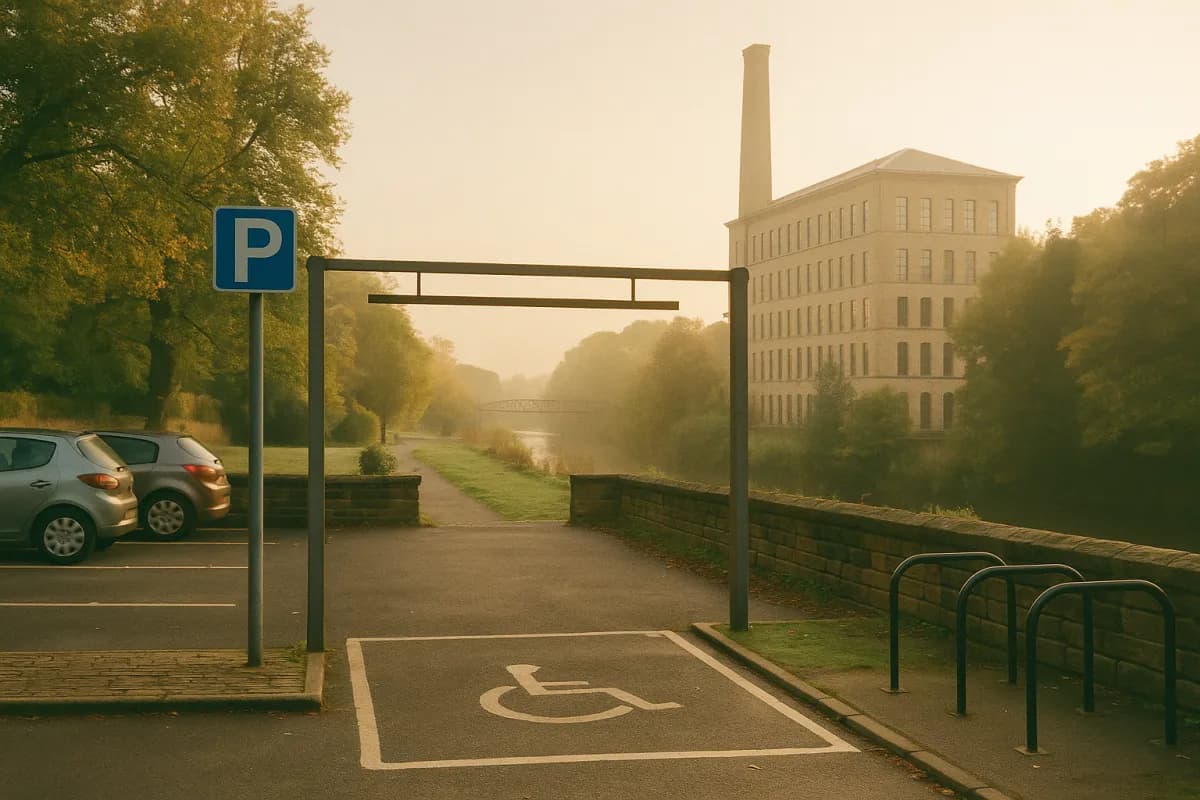
Saltaire’s terraces — built for gas lighting, later retrofitted for electricity. Some still have original wiring behind the plaster.
Part P and what it actually means for you
Part P of the Building Regulations says that most electrical work in your home must either be done by a “competent person” (registered with a scheme like NICEIC, NAPIT, or ELECSA) or inspected by Building Control afterwards. This isn’t optional — it’s the law.
Needs Part P notification
- • Consumer unit (fuse box) replacement
- • New circuits
- • Rewiring (full or partial)
- • Any work in bathrooms or kitchens
- • Garden/outbuilding wiring
- • EV charger installation
Doesn’t need notification
- • Replacing a light fitting (like for like)
- • Replacing a socket faceplate
- • Adding a fused spur to an existing circuit
- • Replacing a damaged cable section
If an electrician does notifiable work, they should issue you a certificate within 30 days. No certificate means the work is technically non-compliant, and you’ll have problems when you sell the house. Always ask for it.
What electrical work costs in BD18
These are real local ranges, not national averages pulled from a comparison site that hasn’t been updated since 2022.
- Emergency call-out (power loss)
- £80–£180Depends on time of day
- Hourly rate
- £45–£70/hr
- Consumer unit replacement
- £350–£600Incl. Part P certificate
- Full house rewire (3-bed)
- £3,000–£5,5005-7 days typical
- Light fitting (per point)
- £40–£80
- New socket installation
- £80–£150
- EICR certificate
- £120–£200
£3,000–£5,500
Full rewire for a 3-bed Saltaire terrace. Takes 5–7 days. Includes Part P certificate. Worth every penny if your house still has rubber-insulated cable.
When your power goes off
Before you call anyone, check these in order:
- 1Check if your neighbours have power. If they don't, it's a supply issue — contact Northern Powergrid on 105.
- 2Check your consumer unit (fuse box). If a breaker has tripped, try resetting it. If it trips again immediately, you have a fault on that circuit.
- 3Unplug everything on the tripped circuit and try again. If it holds, plug things back in one at a time until you find the faulty appliance.
- 4If the main switch has tripped (not just one circuit), or nothing will reset, call an electrician.
EICR — do you actually need one?
If you’re a landlord, yes — it’s been a legal requirement since July 2020. You need one before a new tenancy starts and then every 5 years. The certificate must be given to your tenants within 28 days.
If you’re a homeowner, it’s recommended every 10 years, or when you buy a property. An EICR costs £120–£200 in the BD18 area and takes 2–4 hours for a standard 3-bed. The report grades any issues from C1 (dangerous — immediate action) to C3 (improvement recommended but not required).
If you’re buying a Saltaire terrace, get one done before you exchange. The vendors are under no obligation to provide one, and the standard homebuyer survey doesn’t cover electrical safety. It’s the single best £150 you’ll spend during the process.
NICEIC vs non-registered
NICEIC, NAPIT, and ELECSA are “competent person” schemes. If your electrician is registered with one, they can self-certify their work under Part P — no Building Control inspection needed.
If they’re not registered, the work is still legal, but you’ll need to pay Building Control to inspect it (typically £200–£300 extra). And you won’t get the same consumer protection — NICEIC-registered electricians carry insurance-backed guarantees.
Bottom line
Always use a registered electrician for notifiable work. It’s cheaper in the long run and protects you if something goes wrong.
Saltaire Guide · Consult
1 / 10
What’s happening?
Pick the closest one — we’ll shape everything else around it. You can change your mind later.
Red flags when hiring an electrician
Electrical work is one of the trades where getting it wrong can kill someone. That sounds dramatic, but it’s true. Here’s what to watch for:
- 1
They can't show you their registration.
NICEIC, NAPIT, or ELECSA — pick one. If they claim to be registered, check online. It takes 30 seconds. If they're not on the register, they're not registered.
- 2
They don't mention Part P.
For notifiable work (consumer units, new circuits, bathroom electrics), a competent electrician will mention Part P without you asking. If they don't, they either don't know the regulations or they're planning to skip the paperwork.
- 3
They quote without seeing the job.
A rewire quote by phone is a guess. Any decent electrician will want to see the property first — especially in a Saltaire terrace where the wiring could be from any decade between 1930 and 2020.
- 4
They want full payment upfront.
A deposit for materials is normal (20-30%). Full payment before work starts is not. Staged payments for larger jobs (rewires) are standard.
- 5
No certificate after the work.
Notifiable work requires a certificate within 30 days. If you have to chase for it, that's a bad sign. If you never get one, the work is non-compliant.

Our accountability register
Electrical work that’s done badly doesn’t just cost you money to fix — it can burn your house down. That’s why we take complaints about electricians particularly seriously.
If you’ve had work done by an electrician — found through us or not — and it was substandard (no certificates issued, non-compliant work, dangerous installations, overcharging), you can report it to us. We don’t publish based on a single complaint. But if patterns emerge — the same name, the same issues, from different households — we will publish a factual summary. The tradesperson is always given the opportunity to respond first.
For dangerous work, we also recommend reporting to the relevant competent person scheme (NICEIC, NAPIT) and to Trading Standards. They can investigate in ways we can’t.
Common questions
Real questions from Saltaire residents. If yours isn’t here, ask us.
How old is the wiring in a typical Saltaire terrace?
It varies hugely. Some were rewired in the 1970s-80s and have PVC cable that's still serviceable. Others still have 1950s rubber-insulated wiring behind the plaster. The only way to know for certain is an EICR — the inspector will tell you exactly what's there and whether it's safe.
Do I need to rewire before I can sell my house?
No — there's no legal requirement to rewire before selling. But if a buyer gets an EICR and it comes back with C1 (dangerous) or C2 (potentially dangerous) codes, they'll negotiate the price down or walk away. Getting your own EICR before listing means no surprises.
Can I install a new light fitting myself?
Yes, if it's a like-for-like replacement (same type, same location). That's not notifiable under Part P. But if you're adding a new light point, moving a fitting, or working in a bathroom, that's notifiable work and needs a registered electrician.
What's the difference between a fuse box and a consumer unit?
A fuse box uses rewirable fuses (ceramic holders with wire). A consumer unit uses MCBs (miniature circuit breakers — switches). If you still have a fuse box with rewirable fuses, it needs upgrading. A modern consumer unit with RCD protection is safer and required for any new work.
How long does a full rewire take?
For a standard 3-bed Saltaire terrace, 5-7 working days. You can usually stay in the house during the work, but you'll lose power to different rooms on different days. The electrician will agree a schedule with you.
Do I need an electrician for an EV charger?
Yes — EV charger installation is notifiable work under Part P. You need a registered electrician who will also handle the OZEV grant application if applicable. The charger unit itself costs £300-£800; installation is £300-£600 on top. Some Saltaire terraces don't have off-street parking, which complicates things — ask about trailing cable solutions.
My landlord won't get an EICR. What can I do?
Since July 2020, landlords are legally required to have a valid EICR. If yours won't provide one, contact Bradford Council's private rented team. They can enforce compliance. You're within your rights to request a copy — they must provide it within 28 days of the inspection.
Is it worth getting a fixed-price quote for a rewire?
Yes, but only after a site visit. Any electrician offering a fixed price by phone for a rewire is guessing. A good electrician will visit, check access points, count circuits, and then give you a fixed price in writing. Expect the quote visit to take 30-60 minutes.
Other local services
Honest guides for every trade. Same editorial approach, same accountability.